
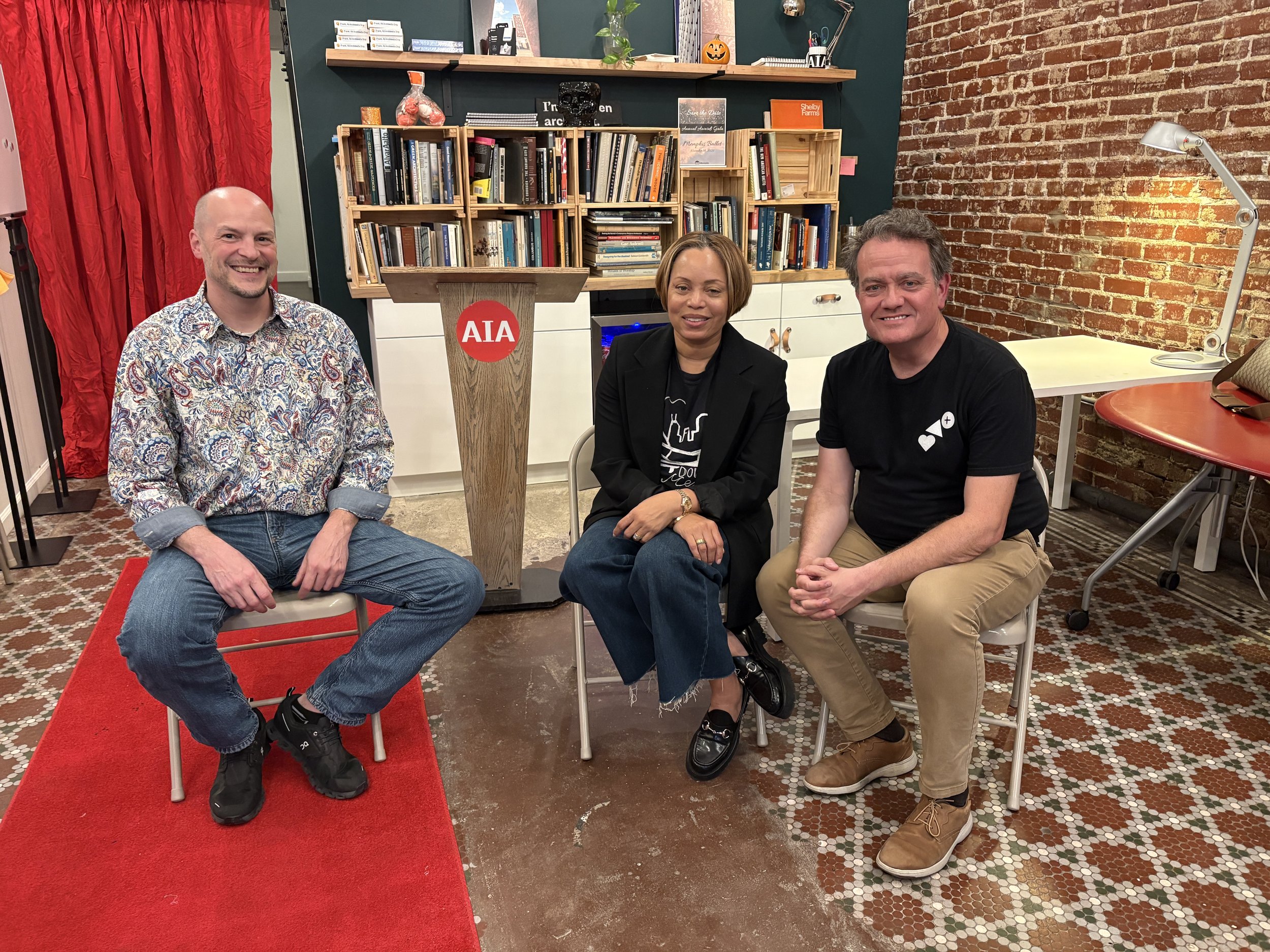
Tony Pellicciotti (LRK), Chandell Ryan (DMC), Marvin Stockwell (BVO)
By Marvin Stockwell
Inspired by “Mud Island: New Momentum for Downtown,” hosted by the AIA Memphis Draughting Club on October 30, 2026.
What happens when you take an old museum, a collection of discarded objects, and a team of Memphis creatives determined to build something extraordinary?
At Baron Von Opperbean and the River of Time (BVO), we're answering that question through reclamation world-building — transforming existing spaces, salvaged materials, and forgotten objects into an immersive world of exploration and discovery.
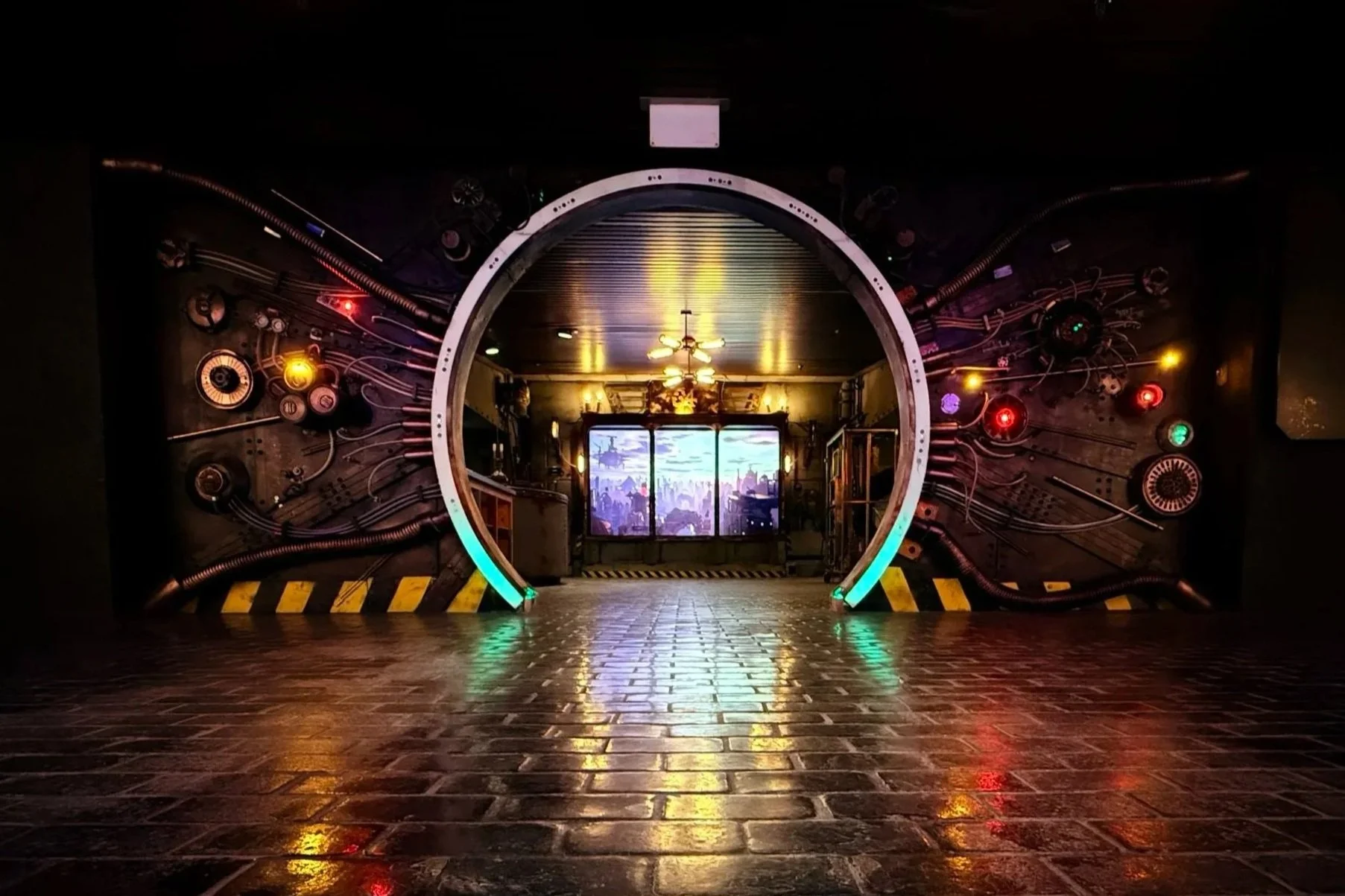
Inside the former Mississippi River Museum on Mud Island, gears, sprockets, old disk drives, lighting fixtures, paint cans, and pieces of museum exhibits take on entirely new identities. Objects once destined for a landfill now help shape fantastical environments, intricate installations, and the stories that unfold throughout BVO.
We don't simply reuse materials. We reimagine what they can become.
Reimagining What Already Exists
On October 30, I joined architect Tony Pellicciotti of LRK for Mud Island: New Momentum for Downtown, hosted by the AIA Memphis Draughting Club.
Our conversation explored adaptive reuse — the practice of giving existing buildings and spaces new purpose — and how BVO takes that philosophy beyond architecture and into the art of world-building.
Tony brings a remarkable perspective to this work. He led the architectural transformation of the former Sears building into Crosstown Concourse, one of Memphis' most celebrated adaptive reuse projects, and now serves as BVO's architect of record.
At BVO, our approach combines creative experimentation with practical responsibility. Reclaiming materials stretches a startup budget, reduces waste, and preserves the craftsmanship of objects and spaces that served another purpose.
Someone designed those objects. Someone built those spaces. Rather than discard that work, we give it another chapter.
A New Chapter for Mud Island
The conversation soon expanded beyond BVO's walls to the future of Mud Island River Park itself.
This 52-acre riverfront park sits in the heart of Memphis, offering extraordinary possibilities for recreation, culture, tourism, and creative development.
By transforming part of the former Mississippi River Museum into an immersive experience, BVO demonstrates one way to breathe new life into an existing public asset.
During the discussion, architects who had already explored BVO connected the ideas of adaptive reuse with the environments they'd experienced firsthand. Their questions sparked a lively exchange about architecture, land use, creative entrepreneurship, and the possibilities for Mud Island and downtown Memphis.
That enthusiasm reinforced something we've believed since the beginning: Memphis already holds tremendous creative potential. Sometimes we simply need to look at familiar places through a different lens.
Building the Future from What Came Before
For nearly three years, artists, designers, technologists, builders, and entrepreneurs have worked to transform an old museum into something that defies easy definition.
BVO invites visitors to explore a fantastical world, but the process of building that world tells another story — one of resourcefulness, collaboration, and respect for what came before.
We're not starting from scratch. We're building on what Memphis already has.
And sometimes, the most imaginative way forward begins with what we choose to reclaim.
